Family Emergency Guide · Issue 5
Medical Emergencies and Medication Needs: 5 Best Ways to Prepare Your Family
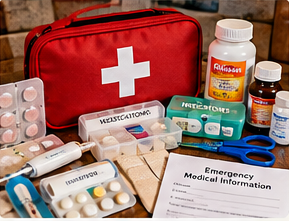
A little medical planning can help your family handle minor injuries and avoid interruptions to essential care. Here are five practical steps to help everyone stay safe and as comfortable as possible.
1. Build a first-aid kit you can actually use
Include adhesive bandages, sterile gauze, gloves, antiseptic supplies, tweezers, and a thermometer. Add items recommended for your household by a clinician. Keep supplies in a labeled, dry container that adults can access quickly. Check expiration dates and replace used items. A kit is most useful when family members know what is inside and have practiced basic first aid. For serious bleeding, breathing difficulty, or other emergencies, call emergency services.
2. Plan prescription refills in advance
Keep an up-to-date medication list with names, doses, pharmacy information, and prescribing clinicians. Ask your pharmacist about refill timing, emergency supply rules, and proper storage; do not change doses or stockpile medicines without professional guidance. Some prescriptions need refrigeration, so discuss a power-outage plan beforehand. Store medicines securely and protect them from heat and moisture. Include necessary medical supplies such as testing equipment or spare batteries where appropriate.
3. Learn essential emergency skills
Consider CPR and first-aid training through a recognized provider. Teach age-appropriate family members how to call emergency services, state the home address, and describe what happened. Keep a clearly marked emergency contact sheet near the kit. Learn how to recognize common warning signs such as stroke symptoms or severe allergic reactions. Training builds confidence but never replaces professional care. Practice calmly so children know whom to ask for help.
4. Prepare for mobility and special needs
Make a plan for family members who use oxygen, powered equipment, mobility aids, or daily care services. Keep spare supplies according to manufacturer and clinician advice. Identify accessible transportation and a backup caregiver. Have copies of essential medical instructions in a waterproof pouch. If equipment requires electricity, ask the utility about available programs while also preparing an independent backup; enrollment does not guarantee uninterrupted power.
5. Keep medical information portable
Put allergies, emergency contacts, current medications, insurance details, and relevant medical instructions in one secure location. Carry a small copy in each go-bag while protecting private information. Review the details after appointments or prescription changes. If you must evacuate, take medications and medical devices first when it is safe to do so. Make sure caregivers know where the information is stored and whom to contact.