Family Emergency Guide · Issue 3
Food Shortages and Spoilage: 5 Best Ways to Prepare Your Family
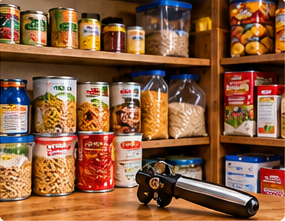
An emergency pantry should make meals simpler, not create another chore when the power is out or stores are closed. Here are five practical steps to help everyone stay safe and as comfortable as possible.
1. Build a practical shelf-stable pantry
Start with familiar foods your household already eats: canned beans, vegetables, fish, fruit, soups, nut butters, crackers, oats, and ready-to-eat meals. Aim for at least several days of food, then gradually extend your supply. Check allergies and special diets. Store foods in a dry, cool location and keep a written inventory. A small, well-organized pantry is often more useful than a large collection of unfamiliar emergency products.
2. Choose meals that need little cooking
Power and water may both be limited. Select meals that can be eaten cold or require only minimal preparation. Pair protein, grains, fruits, and vegetables to keep meals balanced. Consider ready-to-eat infant foods where needed. Do not use charcoal grills or camping stoves inside the house or garage; they can produce deadly carbon monoxide. If cooking outdoors, follow equipment instructions and local fire restrictions. Keep a few comfort foods to make mealtimes feel normal.
3. Prevent refrigerator and freezer losses
Keep appliance doors shut as much as possible during an outage. A refrigerator generally keeps food cold about four hours unopened, while a full freezer may hold temperature about 48 hours, or 24 hours when half full. A thermometer makes decisions more reliable. Discard unsafe perishables; never taste food to check whether it is safe. Photograph the contents for insurance if a prolonged outage causes substantial loss.
4. Rotate supplies before they expire
Use a first-in, first-out system: place newer packages behind older ones. Mark purchase dates and inspect cans for swelling, leaks, severe rust, or damage. Check supplies twice a year, replacing items that no longer meet your household's needs. Store food away from cleaning chemicals, moisture, insects, and extreme temperatures. Remember that children grow and preferences change. Pantry rotation saves money because your emergency foods also become ordinary meals.
5. Make a family meal plan
Write three breakfasts, lunches, and dinners using only your stored supplies. Include drinking water needed for preparation, disposable plates if water is limited, and a safe way to open packages. Ask children to help choose a few familiar snacks. Keep pet food and any special nutritional supplies nearby. Practice one no-power meal so you can spot missing utensils, ingredients, or water before an emergency occurs.