Family Emergency Guide · Issue 6
Loss of Communication: 5 Best Ways to Prepare Your Family
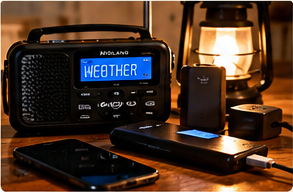
When cell networks and internet access fail, a simple family communication plan helps everyone know what to do next. Here are five practical steps to help everyone stay safe and as comfortable as possible.
1. Keep a battery-powered radio
A NOAA weather radio can provide official weather alerts even when internet service is unavailable. Choose a model with battery power or a hand crank, and learn how to tune it before an emergency. Test it periodically and store spare batteries nearby. Some models include flashlights or charging ports, but do not rely on those features as your only source of power. Listen for local instructions and distinguish verified alerts from rumors.
2. Charge devices before storms
Keep phones and a high-capacity USB power bank charged when severe weather is forecast. Put compatible charging cables in the same bag. During an outage, turn on low-power mode and lower screen brightness. Avoid unnecessary videos and background activity. A car charger may provide another option, but never run a vehicle in an attached garage or enclosed space. Test the charging setup with each family member's device ahead of time.
3. Create a written contact plan
Choose an out-of-area relative or friend as the main check-in contact. Write down phone numbers, addresses, school pickup procedures, and two meeting places. Keep copies in wallets, backpacks, and the home emergency kit. Agree on when to check in and what to do if nobody can connect. Text messages sometimes go through when voice calls fail, but they are not guaranteed. Teach children the plan without frightening them.
4. Consider local two-way radios
Walkie-talkies can help household members communicate over short distances when cell service is down. Their real-world range depends on terrain, buildings, batteries, and local radio rules. Test them around your neighborhood instead of trusting the advertised range. Agree on channels and simple messages. Two-way radios are a supplement, not a substitute for emergency services or official alerts. Keep them charged and labeled.
5. Practice offline navigation and updates
Download local maps and important documents before an emergency. Keep a paper street map in your vehicle and know where your family would meet if separated. Find your utility company's outage reporting number and local emergency information channels. Never drive toward a disaster area just to seek a signal. A ten-minute family practice session can reveal missing numbers, dead batteries, or confusing instructions.